Spelling Bee Scoring and Ranks Explained (Full Rank List)
How Spelling Bee scoring works: points per word, the pangram bonus, and every rank from Beginner to Queen Bee with the percentage of points each one needs.
Key takeaways
- 4-letter words score 1 point; longer words score 1 point per letter.
- A pangram adds a 7-point bonus, so a 7-letter pangram is worth 14.
- Ranks are percentages of each puzzle's maximum: Genius is 70%.
- Queen Bee requires every word in the answer list.
Spelling Bee scoring looks simple, but the way points and ranks interact decides how you should play. This guide covers every rule, every rank, and what an average puzzle is worth.
How words are scored
| Word | Points | Example |
|---|---|---|
| 4 letters | 1 | TART = 1 |
| 5 letters | 5 | TRAIN = 5 |
| 6+ letters | 1 per letter | TRAINED = 7 |
| Pangram | length + 7 | MILITARY = 8 + 7 = 15 |
The jump from 4 letters (1 point) to 5 letters (5 points) is the biggest in the game. A single 5-letter word is worth five 4-letter words.
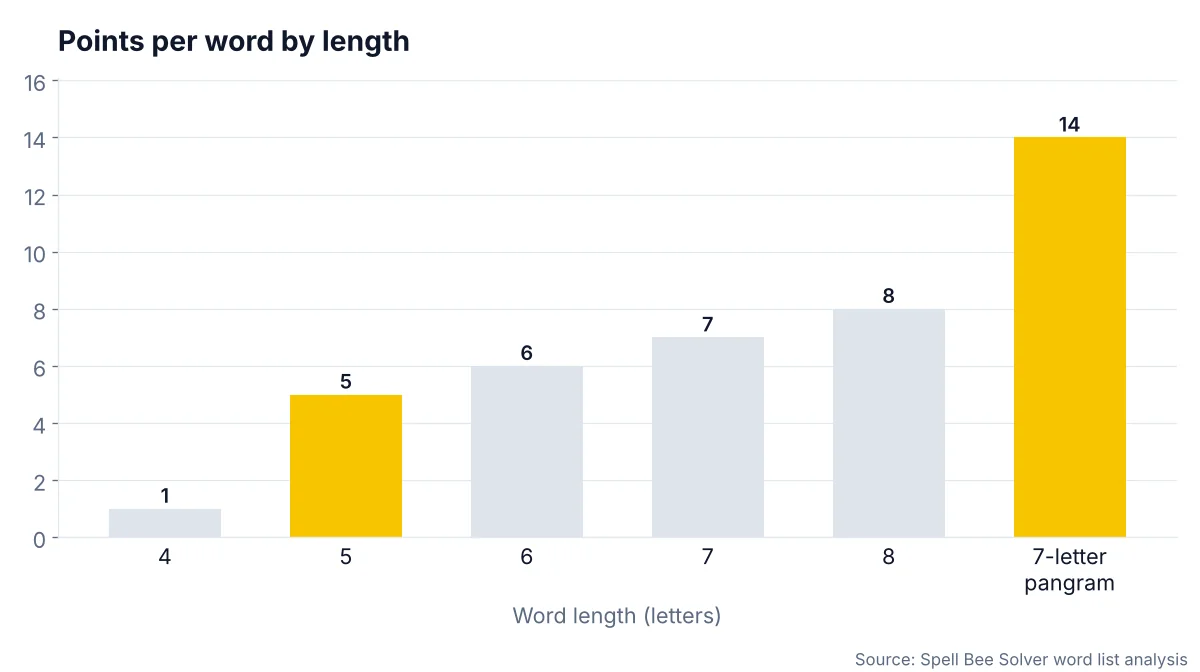
A pangram uses all seven hive letters at least once and adds a 7-point bonus. Every puzzle has at least one. Learn how to spot it in how to find the pangram.
Every rank, in order
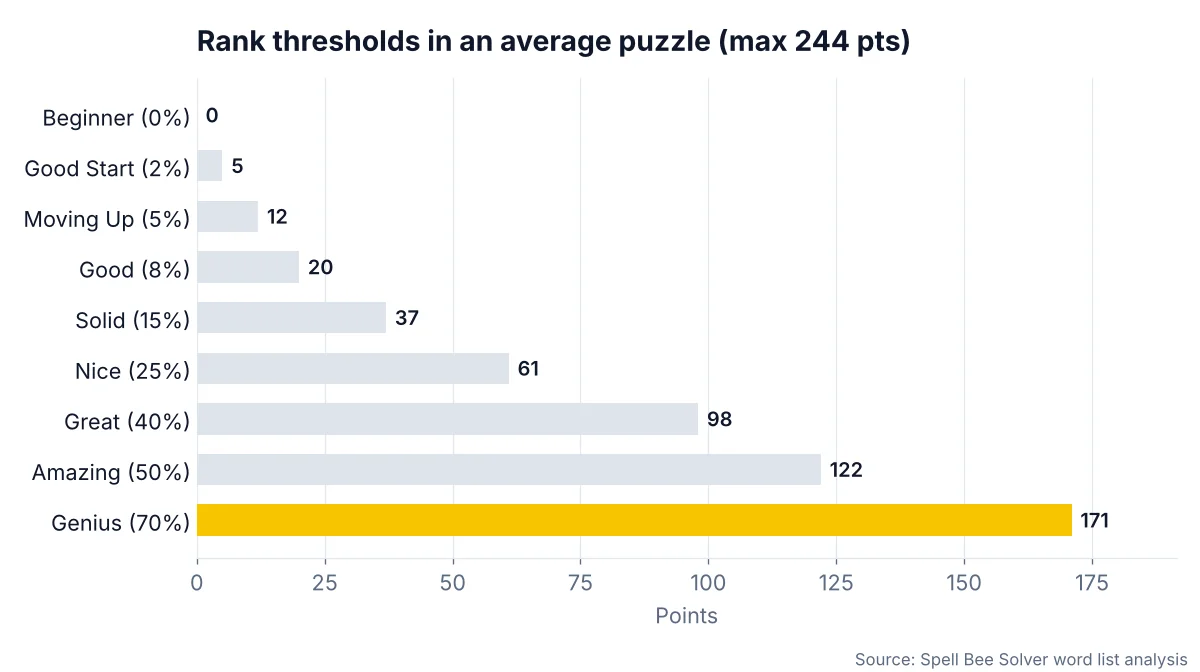
Ranks are based on a percentage of the puzzle’s maximum score, so the same rank needs different points on different days. These are the thresholds used on Spell Bee Solver, which follow the widely used NYT-style ladder:
| Rank | Share of max score | Average points* |
|---|---|---|
| Beginner | 0% | 0 |
| Good Start | 2% | 5 |
| Moving Up | 5% | 12 |
| Good | 8% | 20 |
| Solid | 15% | 37 |
| Nice | 25% | 61 |
| Great | 40% | 98 |
| Amazing | 50% | 122 |
| Genius | 70% | 171 |
| Queen Bee | 100% of words | 244 |
*Average across 500 puzzles generated in our game. The average maximum score was 244 points from 54 words.
Genius vs Queen Bee
Genius is the top points-based rank. Queen Bee is different: it requires finding every word in the answer list, not just reaching a points total. On Spell Bee Solver, bonus words (valid but uncommon words outside the main list) give you points but don’t count toward Queen Bee. Ready to try? Read how to get Queen Bee.
What the scoring means for strategy
- Long words matter most. In our sample, Genius was reachable with about 45% of the words when the longest were found first.
- 4-letter words are 37% of answers but carry a small share of points. Find them, but don’t obsess over them before Genius.
- The pangram is worth about 10% of the total on average. That’s why finding it early gives such a visible jump.
If you keep stalling at 50%, see how to get from Amazing to Genius.
Quick reference
- 4 letters = 1 point
- 5+ letters = 1 point per letter
- Pangram = +7
- Genius = 70% of max
- Queen Bee = every word
You can see each puzzle’s exact thresholds by tapping the rank bar in Spelling Bee Unlimited. The maximum for any set of letters is also shown in the Spelling Bee Solver.
Frequently asked questions
How is Spelling Bee scored?
4-letter words score 1 point. Words of 5 or more letters score 1 point per letter. A pangram, which uses all seven letters, adds a 7-point bonus.
What percentage is Genius in Spelling Bee?
Genius is reached at 70% of the puzzle's maximum score.
What are the Spelling Bee ranks in order?
Beginner, Good Start, Moving Up, Good, Solid, Nice, Great, Amazing, Genius and Queen Bee.
Why does the number of points for Genius change every day?
Ranks are percentages of each puzzle's maximum score. A puzzle with many long words has a higher maximum, so Genius needs more points.
Keep reading
Why Is There No S in Spelling Bee? The Rule Explained
Why the letter S almost never appears in Spelling Bee, what the editor said about it, the rare exceptions, and how the rule changes the words you can play.
Spelling Bee Strategy: A Step-by-Step Guide to Reach Genius
A proven Spelling Bee strategy in 6 steps: scan the hive, build word families, find the pangram and reach Genius faster. Based on data from 500 puzzles.
How to Get Queen Bee in Spelling Bee (Find Every Last Word)
Queen Bee means finding every word in the puzzle. Learn where the last words hide, the repeated-letter trick, and a clean-up routine to finish the hive.